
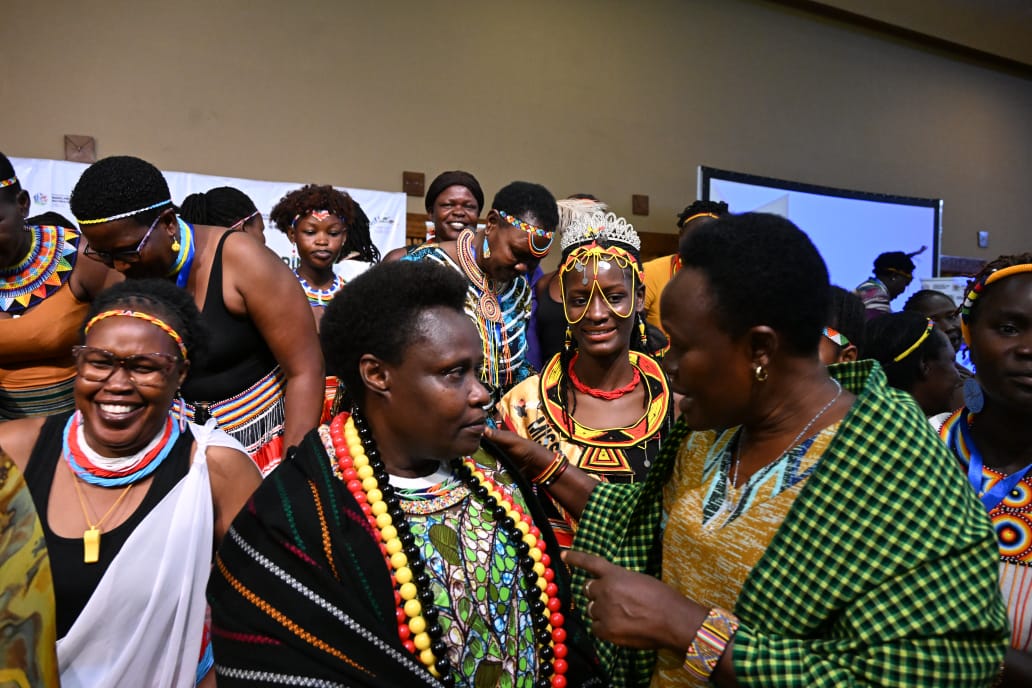
Vice President Jessica Alupo has officially launched the African Pastoralist Women Network (ARPWN) and a Learning Centre aimed at advancing gender justice, climate resilience, and equitable land governance across the continent.
The launch took place during the ongoing five-day African Pastoralist Women Gathering (APWG), held in line with the International Year of Rangelands and Pastoralists 2026.
The event has attracted over 200 participants from across Northern, Sub-Saharan, West, Central, Eastern, and Southern Africa, including grassroots pastoralist women, leaders, government officials, and civil society organizations.
Held under the theme “Voices from the Rangelands: African Pastoralist Women Rising for Land Rights, Climate Justice, Equity, and Peace,” the gathering is taking place at Speke Resort Munyonyo.
While launching the network, Alupo emphasized the critical role pastoralist women play in sustaining livelihoods, protecting ecosystems, preserving indigenous knowledge, and promoting peace, despite remaining largely underrepresented in decision-making spaces.
“Pastoralist women play a crucial but often invisible role in animal care, food production, household resilience, and peacebuilding. This must be recognized,” she said.
She noted that the gathering provides an important platform for participants to share experiences, address challenges, and explore opportunities such as value addition to pastoral products, cultural preservation, and livelihood diversification.
The Vice President challenged participants to generate concrete proposals on key thematic areas, including strengthening pastoral women’s leadership, promoting gender-responsive policies, securing women’s land rights, enhancing climate resilience, and recognizing pastoral mobility as a fundamental right. She also highlighted the contribution of pastoralism to sustainable food systems and agroecology.
Alupo reaffirmed the government’s commitment to creating an enabling environment for pastoralism through supportive policies, laws, and regulatory frameworks. She cited existing frameworks such as the National Land Policy and the National Climate Change Act of 2021 as key milestones.
She also commended President Museveni for efforts to restore peace in rangeland areas, particularly through the disarmament process in the Karamoja sub-region.
However, she acknowledged persistent challenges affecting pastoralist communities, including land degradation, conversion of grazing land into crop farming, mining and infrastructure development, and fragmentation of rangelands.
She noted that these pressures have contributed to declining livestock productivity, reduced food and nutrition security, and limited access to essential services such as veterinary care and pasture management systems.
“Women and children disproportionately bear the burden of these challenges, facing increased workloads and reduced educational opportunities. Urgent, inclusive, and sustainable interventions are essential,” Alupo said.
On climate change, she pointed to increasing droughts and erratic rainfall patterns, which disrupt traditional pastoral mobility and heighten food insecurity and livestock losses.
She further highlighted gaps in knowledge, institutional frameworks, and data systems, noting that limited understanding of pastoralism among policymakers often leads to ineffective interventions, while weak governance structures exclude traditional systems and fuel resource conflicts.
Alupo pledged that the government would continue strengthening the rights of pastoral communities, particularly women, while addressing climate change impacts and promoting sustainable rangeland management.
The Minister of State for Ethics and Integrity, Rose Lilly Akello, applauded development partners and funders, including GIZ, FAO, and International Land Coalition, among others, for supporting the initiative.
Uganda’s rangelands cover approximately 44 percent of the country’s total land area—about 84,000 square kilometres—and support more than 6.6 million people. These ecosystems, commonly referred to as the “Cattle Corridor,” stretch from the north-eastern borders with Kenya and South Sudan to the south-western border with Tanzania, spanning districts with varying levels of rangeland coverage.
The newly launched network and learning centre are expected to strengthen the voice and capacity of pastoralist women across Africa, positioning them at the forefront of land governance, climate action, and sustainable development.
